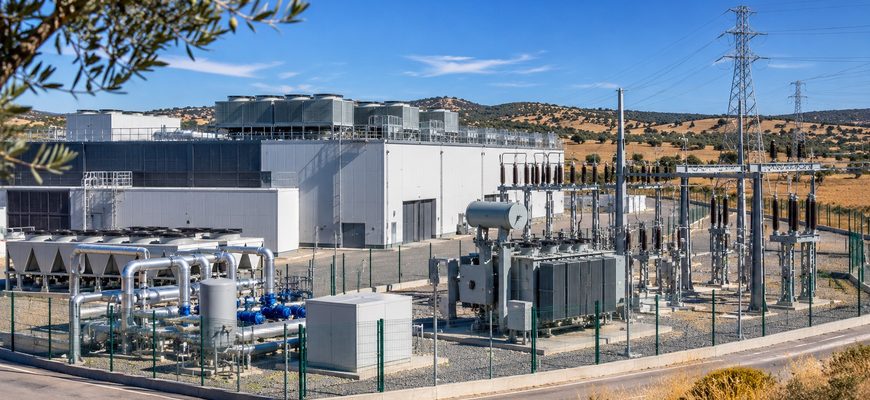
Spain has approved new data center rules covering renewable electricity, water efficiency, reporting and digital resilience—raising the stakes for Europe’s AI infrastructure boom. The government announced the royal decree on November 20, 2026, while developers told Reuters that tougher requirements could cause some planned investment to move to France or Portugal.
The central conflict is economic as well as environmental. Madrid argues that setting clear efficiency standards protects households and businesses from higher power-system costs. Some operators say the same rules could make proposed projects uneconomic. Neither claim establishes how much investment will actually leave Spain.
Spain’s New Data Center Rules: What Was Approved
The Spanish Ministry for the Ecological Transition (MITECO) said the Council of Ministers approved a royal decree establishing energy, environmental, resilience and digital-sovereignty requirements for data centers. The announcement follows months of consultation and revisions. It is an approval announcement; administrators and investors should verify the final text, publication in Spain’s Official State Gazette and commencement provisions before treating every provision as already enforceable.
According to the ministry, data centers must justify 80% renewable electricity consumption with hourly correlation—an hour-by-hour accounting approach—until renewable energy makes up more than 90% of the national electricity mix. The decree also addresses water-use efficiency (WUE) under the emerging European labeling framework.
The government says data centers above 500 kW of IT power must provide MITECO with energy-efficiency and sustainability information for annual publication in line with Commission Delegated Regulation (EU) 2024/1364. A reporting threshold should not be confused with a blanket minimum size for every other obligation in the decree.
| Area | Government announcement | Operational implication |
|---|---|---|
| Renewable electricity | 80% hourly matching while national renewable share remains at or below the stated 90% transition threshold. | Power procurement needs a time-based view, not only annual certificates. |
| Water efficiency | Compliance with the highest water-use efficiency level within the developing EU label. | Cooling designs and water metering become central to facility planning. |
| Sustainability reporting | Reporting to MITECO for facilities above 500 kW IT power, aligned with EU 2024/1364. | Operators must measure and disclose relevant performance indicators. |
| Resilience and digital sovereignty | Security and operational-resilience requirements are part of the decree’s stated scope. | Data governance, operational controls and compliance architecture need review. |
| Legal implementation | Council of Ministers approval announced Nov. 20. | Check final gazetted text and effective dates before compliance decisions. |
Why 80% Hourly Renewable Matching Is Different
A data center may claim a large annual supply of renewable energy through contracts while consuming grid electricity at hours when contracted wind or solar output is low. Hourly correlation is designed to narrow that timing gap. In principle, the operator must demonstrate sufficient eligible renewable supply for the particular hour, subject to detailed rules in the final decree.
Illustrative explanation of accounting concepts; actual eligibility, transition and contract conditions are governed by Spain’s final legal text.
Consider an illustrative 10 MW continuous-load facility. Its consumption is 10 MWh in a one-hour interval. An 80% hourly target corresponds to 8 MWh of eligible renewable supply in that hour. That arithmetic is only an example, not a statement that every installation faces the same obligation or can use all forms of power purchase agreement equally.
Water use is the other physical constraint. Facilities that use evaporative cooling can reduce some electricity demand but require access to water; predominantly dry cooling often changes the thermal and energy trade-off. The regulation increases the need to evaluate both energy and water outcomes together instead of optimizing a single figure.
Why Developers Say Billions of Investment Could Be at Risk
Reuters reported on November 20 that two executives from separate companies developing data centers in Spain consider aspects of the energy requirements commercially difficult and are examining projects in France and Portugal. That is a description of their views and possible responses. Reuters did not establish that the projects had already moved, nor did it quantify a verified total of canceled investment.
Criticism has also come from industry groups and the Spanish energy regulator during the consultation process. Their concerns focus on the design of renewable additionality, hourly matching, the relationship between energy and water-efficiency thresholds and the effects on site viability. These are contested policy judgments, not evidence that sustainability requirements are intrinsically impossible.
Spain’s government has defended the intervention. Energy Minister Sara Aagesen said that in an alternative scenario without the decree, electricity bills could face an approximately €5 billion annual impact, partly because the system might need more gas-fired generation. This is a government counterfactual calculation, not money saved and measured on November 20.
What This Means for Europe’s AI Infrastructure
Developers may need to show credible renewable procurement aligned to actual compute demand, not merely a favorable interconnection agreement.
WUE performance, water availability and hot-weather engineering can influence architecture, cost and community acceptance.
Hourly matching can change the evaluation of wind, solar, long-term PPAs, storage and temporal demand flexibility.
Operators weigh long-lived infrastructure costs against standards, compliance deadlines and possible changes after elections.
Spain has attracted strong interest in high-density compute because of its renewable resources, available sites and network connectivity. But the availability of renewable power on an annual basis does not necessarily align with the continuous electricity demand of AI training and inference. The new decree makes that operational distinction especially consequential for developers.
The rules have also become politically salient ahead of Spain’s November 29 election. Reuters reported that the opposition party leading pre-election polling has said it would rescind them. That pledge is a campaign position; it is not a policy change currently in effect.
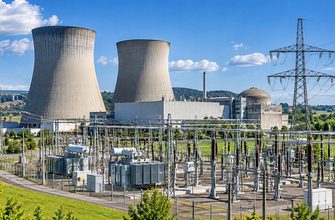
For additional infrastructure context, read Servers.News on E.ON and NVIDIA’s study of former nuclear plant sites, the UK AI data center delayed by grid access and OVHcloud’s available power capacity.
The Questions Investors Need Answered
Are the new rules definitely in force today?
The Spanish government announced approval on November 20. The final published decree and commencement provisions determine when each requirement becomes legally effective.
Does 80% mean yearly renewable energy?
No. The government explicitly describes hourly correlation rather than annual accounting alone, subject to the detailed legal mechanisms and transition condition.
Has Spain already saved €5 billion?
No. The figure is a government estimate of an avoided future or counterfactual impact, not an observed saving.
Have data center companies already moved to France or Portugal?
Reuters quotes executives examining alternatives; the reporting does not confirm completed relocation of the projects discussed.
Spain is trying to attach electricity, water and resilience conditions to a rapidly growing digital industry. The next phase will depend on the final enforceable text, investment decisions and how the policy survives electoral debate.