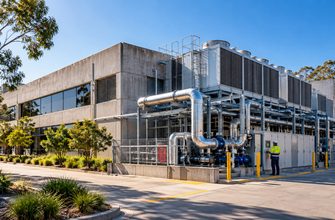
Microsoft has withdrawn from an agreement to use a planned AI data center in Loughton, Essex, that was expected to accommodate approximately 23,000 NVIDIA GB300 GPUs. The decision, reported on October 18, 2026, follows major electricity-grid delays affecting the 50-megawatt project developed by British AI infrastructure company Nscale.
The withdrawal illustrates a growing challenge for artificial intelligence infrastructure: securing advanced computing hardware and customers does not guarantee that sufficient electricity will be available when a new data center is scheduled to open.
According to Reuters, Microsoft recently terminated its agreement for the Loughton facility. Nscale linked the setback to electricity-grid problems while emphasizing that its broader relationship with Microsoft remains intact.
- Microsoft Nscale Data Center Deal: What Changed?
- The Power Grid Could Delay the Project Until the 2030s
- Why 50MW of AI Capacity Is Difficult to Deliver
- Microsoft and Nscale Still Have Other AI Infrastructure Agreements
- AI Data Center Power Constraints Are Becoming a Global Problem
- What Happens Next for the Nscale Loughton Project?
- Sources and Verification
Microsoft Nscale Data Center Deal: What Changed?
The Loughton project was announced as a major component of the United Kingdom’s AI infrastructure expansion.
Under the original plan, Nscale would deliver a 50MW AI computing facility capable of expanding to 90MW. Microsoft Azure was expected to use approximately 23,000 NVIDIA GB300 accelerators at the campus.
Nscale’s October 2025 announcement identified the first quarter of 2027 as the planned starting point for GPU deployments.
That agreement is now affected by Microsoft’s withdrawal from the Loughton site. The decision does not establish that Microsoft has cancelled its other AI infrastructure contracts with Nscale.
| Project Detail | Reported Status |
|---|---|
| Location | Loughton, Essex, United Kingdom |
| Developer | Nscale |
| Original customer | Microsoft Azure |
| Planned AI capacity | Approximately 23,000 NVIDIA GB300 GPUs |
| Initial facility capacity | 50MW planned |
| Expansion potential | Up to 90MW |
| Previously announced GPU timeline | From Q1 2027 |
| Grid connection | Substantial delays reported; sufficient supply potentially unavailable until the 2030s |
| Microsoft agreement | Withdrawal reported October 18, 2026 |
| Project future | Nscale says it remains committed and is exploring alternatives |
Sources: Nscale’s original infrastructure announcements, Reuters and The Guardian. Planned computing capacity is not equivalent to installed or operational hardware.
The Power Grid Could Delay the Project Until the 2030s
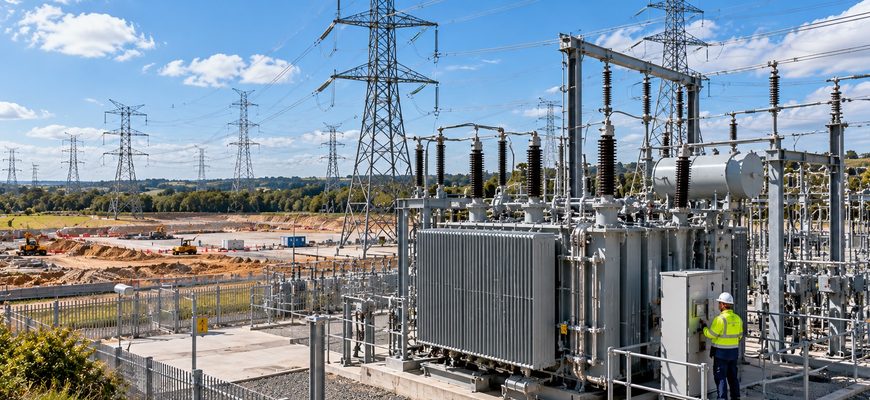
Electricity availability appears to be the central infrastructure obstacle.
The Guardian reported that UK Power Networks, the electricity distribution network operator serving London and parts of southeast England, had informed Nscale that sufficient grid capacity might not be available until the early to mid-2030s.
That reported timeline is substantially later than Nscale’s previous deployment expectations.
The company had originally targeted the fourth quarter of 2026 for the Loughton facility in an announcement issued in January 2025. Its later Microsoft infrastructure announcement identified Q1 2027 for the planned GPU deployment.
The latest reports therefore describe more than a routine construction delay. They raise questions about whether the site’s electrical infrastructure can support the originally planned computing deployment within a commercially useful timeframe.
Why 50MW of AI Capacity Is Difficult to Deliver
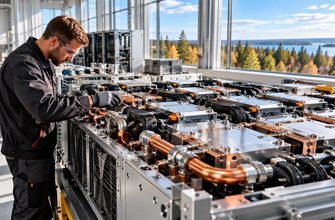
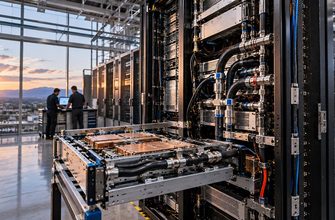
A 50MW data center requires a substantial and reliable electricity supply. High-density GPU infrastructure also requires electrical distribution, backup systems, cooling equipment and network connectivity.
Adding more accelerator servers cannot overcome a shortage of available grid capacity.
Even where land, equipment and financing are available, grid connection work may depend on upstream network upgrades and approvals outside the direct control of the data-center developer.
Importantly, the Loughton project’s planned 50MW capacity should not be confused with electricity already being consumed by installed GPUs.
Key infrastructure distinction The approximately 23,000 NVIDIA GB300 accelerators represented a planned deployment for Microsoft Azure. Public reporting has not established that those GPUs were installed and operating at Loughton. The latest development concerns the commercial agreement and the project’s ability to obtain power.
Microsoft and Nscale Still Have Other AI Infrastructure Agreements
The cancellation is specific to Loughton. Nscale has said that its relationship with Microsoft remains strong and that the local electricity-grid problem does not affect its other contracts.
Nscale’s earlier announcements described a substantially larger international infrastructure program involving deployments in the United States, Portugal and Norway.
Its October 2025 agreement covered approximately 200,000 NVIDIA GB300 GPUs across multiple locations. The Loughton project represented one component of that broader program.
Microsoft’s decision also comes as the company develops its own AI accelerator infrastructure. In a separate initiative, Microsoft has unveiled its Maia 300 rack-scale AI platform, with production deployments planned for 2027.
That hardware announcement and the withdrawal from Loughton are separate developments. There is no verified evidence that Maia 300 caused Microsoft to terminate the Nscale agreement.
AI Data Center Power Constraints Are Becoming a Global Problem
The Loughton setback reflects a broader infrastructure challenge facing the AI industry.
New computing facilities can require tens or hundreds of megawatts of electricity, while power generation and transmission infrastructure often operate on different planning and construction timelines.
Similar challenges have triggered regulatory debates in the United States. Servers.News recently reported how FERC rejected parts of PJM’s proposed data-center power-curtailment framework while approving additional reporting requirements for large electricity users.
Technology companies are also developing ways to make AI workloads more responsive to electricity availability.
In September, Google, NVIDIA and Emerald AI launched an alliance focused on power-flexible AI data centers.
Such approaches may help selected facilities manage periods of grid stress. They do not automatically resolve the absence of a sufficiently large electricity connection.
What Happens Next for the Nscale Loughton Project?
Nscale says it remains committed to developing the Loughton site and is exploring alternative electricity sources.
The company is also considering other UK expansion locations.
Several important questions remain unresolved, including whether Nscale can secure an alternative electricity supply, when the facility might begin operating and whether another customer will replace Microsoft at the site.
No confirmed replacement tenant or revised commissioning date was established in the reports reviewed for this article.
For data-center operators and AI infrastructure investors, the lesson is significant: securing customers and advanced GPU hardware is only part of the challenge.
Without dependable access to sufficient electrical capacity, even an extensively announced AI computing project may face delays that undermine its original commercial plan.
Sources and Verification
The original Loughton infrastructure plan and GPU specifications were published in Nscale’s official Microsoft infrastructure announcement.
Microsoft’s reported withdrawal and Nscale’s response were covered by Reuters on October 18, 2026.
Additional reporting on electricity connection delays and the project’s development status was published by The Guardian.
Reporting note: The precise date of Microsoft’s contract termination has not been disclosed. Grid connection timelines cited in this article are attributed to published reporting and do not constitute confirmation of an operational power connection.