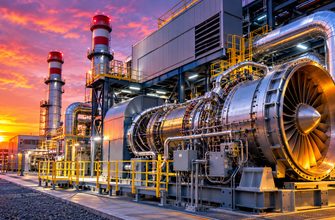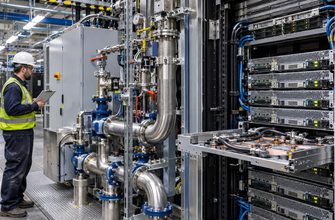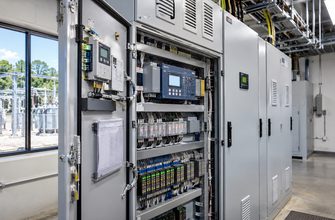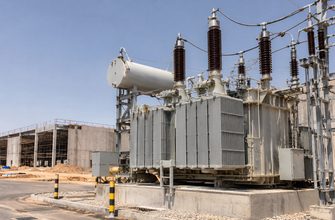
Former nuclear sites in Germany could become locations for future AI data centers, according to E.ON. Speaking after the energy group’s earnings presentation on November 11, Chief Financial Officer Nadia Jakobi said the company is examining whether existing industrial infrastructure and high-capacity electricity-grid connections could support new computing facilities.
The assessment involves NVIDIA and PreussenElektra, E.ON’s nuclear decommissioning subsidiary. The companies are studying the potential of former power plant sites, but no specific location, investment budget, construction schedule or data center capacity has been approved.
The latest comments follow a cooperation announcement made on October 21, 2026. The development is therefore a renewed confirmation of an existing feasibility review, rather than the launch of a newly authorized building project.
PreussenElektra’s eight locations are at different stages of dismantling. The number does not represent eight approved AI data center projects.
E.ON Confirms NVIDIA Review of Former Nuclear Sites
On November 11, E.ON CFO Nadia Jakobi said the company sees potential value in reusing former nuclear power plant locations for data centers.
Speaking during a post-earnings presentation, she emphasized the industrial infrastructure already available at some of these locations, particularly their large electricity-grid connections.
According to Reuters’ November 11 report , Jakobi described the cooperation with NVIDIA as an initial assessment of feasibility.
The underlying partnership had already been outlined on October 21 by PreussenElektra and NVIDIA.
PreussenElektra is contributing knowledge of its former nuclear sites, their infrastructure and regulatory conditions. NVIDIA is evaluating the technical requirements and potential layouts of high-performance AI computing facilities.
The companies intend to determine whether individual locations offer a viable combination of land, electricity infrastructure and operational suitability.
Why Former Nuclear Sites Could Attract AI Data Centers
The strongest infrastructure advantage is potentially the existing electricity connection.
Nuclear power stations historically required substantial transmission capacity and dedicated electrical infrastructure. Those assets may remain valuable even after the reactors are permanently shut down.
Developing a large AI data center on previously used industrial land could also offer benefits related to site access, zoning history and existing utility corridors.
But an existing grid connection is not equivalent to a guaranteed right to consume the same amount of electricity as a former generating plant supplied.
The grid operator would still need to assess the proposed load, connection rights, local network conditions and any upgrades needed for sustained high-demand computing.
The Critical Difference: Generation vs Consumption
A nuclear power plant historically exported electricity into the network. An AI data center would normally import electricity from it.
Reusing parts of the electrical infrastructure may therefore be useful, but it does not automatically eliminate network studies or provide a ready-made energy supply.
Original Servers.News technical schematic. The sequence illustrates a potential redevelopment process; it does not represent an approved E.ON or NVIDIA construction plan.
Which German Nuclear Sites Could Be Considered?
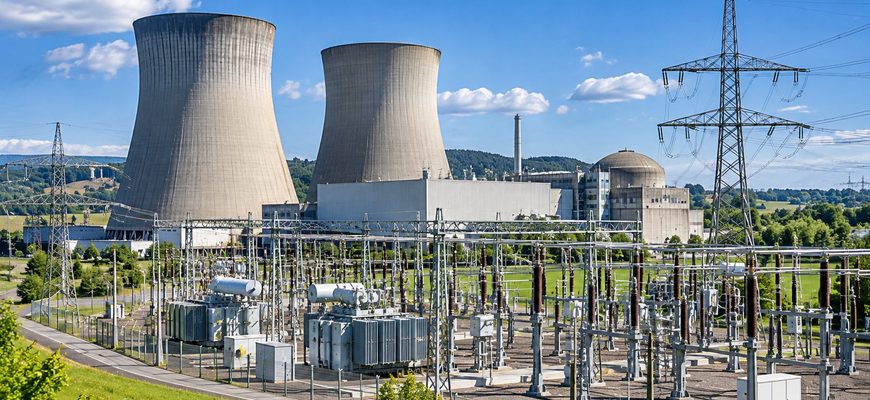
PreussenElektra is responsible for dismantling eight nuclear power plants in Germany. Its portfolio includes facilities such as Grohnde, Unterweser and Stade in Lower Saxony.
German public broadcaster Tagesschau identified those three sites as possible candidates when reporting the October cooperation announcement.
Their mention does not establish that any has been formally selected for an AI factory.

Germany permanently shut down its final operating nuclear reactors in April 2023. Many former sites are still undergoing dismantling, waste management and regulatory oversight.
That means suitable land may not immediately be available for a new industrial use, even where substantial electrical infrastructure remains.
| Project Element | Known Position | What Still Needs Verification |
|---|---|---|
| Land | Former nuclear industrial sites exist | Availability and redevelopment permissions |
| Grid | High-capacity infrastructure may exist | Import capacity and connection agreements |
| Cooling | Former plants had industrial cooling systems | Reuse suitability, permits and new cooling design |
| Compute | NVIDIA is evaluating technical requirements | Selected hardware, configuration and operator |
| Investment | Feasibility stage | Budget, financing and final approval |
| Construction | Not announced | Site selection, permits and schedule |
The Engineering and Regulatory Barriers
The feasibility study will need to address several issues beyond the availability of industrial land.
- Nuclear decommissioning: dismantling work, site release and any remaining radioactive waste facilities can restrict redevelopment.
- Electrical load: existing grid infrastructure must be evaluated for a major new consumer rather than its former generating function.
- Cooling: AI computing facilities need an appropriate thermal management system, which may differ substantially from the former plant design.
- Environmental approval: land use, water requirements, construction permits and community impacts need project-specific assessment.
- Commercial viability: a developer must establish equipment costs, electricity pricing, customer demand and financing.
These are reasons why a promising site can remain unsuitable for immediate construction, even when its power infrastructure looks attractive on paper.
Stages are illustrative, not a progress percentage or construction timeline. No final project approval has been announced.
Why the Timing Matters for AI Infrastructure
The E.ON proposal comes amid growing concern about the time needed to connect large computing developments to electricity grids.
In the United Kingdom, Microsoft withdrew from a planned Nscale AI data center agreement amid significant power-connection delays.
In the United States, OpenAI’s Grid Protectors initiative is examining how future large computing campuses can respond more flexibly to grid emergencies.
And SoftBank’s latest financial disclosure shows the risks of securing power equipment ahead of finalized development requirements. The company reported a $3.73 billion equipment-related loss after revising procurement arrangements for US AI infrastructure.
Together, these developments show that power access is becoming as important to AI expansion plans as processors and servers.
What E.ON’s Financial Results Reveal
E.ON reported approximately €5.2 billion of investments during the first nine months of 2026, primarily directed toward the expansion, modernization and digitalization of energy networks.
It also reported approximately €7.1 billion in adjusted group EBITDA for the same period and reaffirmed its 2026 financial guidance.
Those figures come from E.ON’s November 11 earnings announcement .
They describe the group’s existing business and investment program. E.ON has not said that its €5.2 billion nine-month investment figure is funding the NVIDIA site review or future AI data center construction.
What Happens Next for E.ON and NVIDIA?
The next significant development would be confirmation that at least one former plant site satisfies the technical, economic and regulatory requirements for further planning.
A credible project announcement would need to identify a specific location, proposed power demand, operating partners, financing arrangements and a construction timetable.
For now, the strongest conclusion is narrower: E.ON and NVIDIA see sufficient potential in Germany’s former nuclear industrial infrastructure to justify a feasibility assessment.
The companies have not announced a nuclear-powered AI facility or committed to constructing a data center at any former reactor site.
The idea is nevertheless significant for AI infrastructure planning. Existing industrial locations with substantial grid connections could become valuable assets in a sector where available power and development timelines increasingly influence investment decisions.