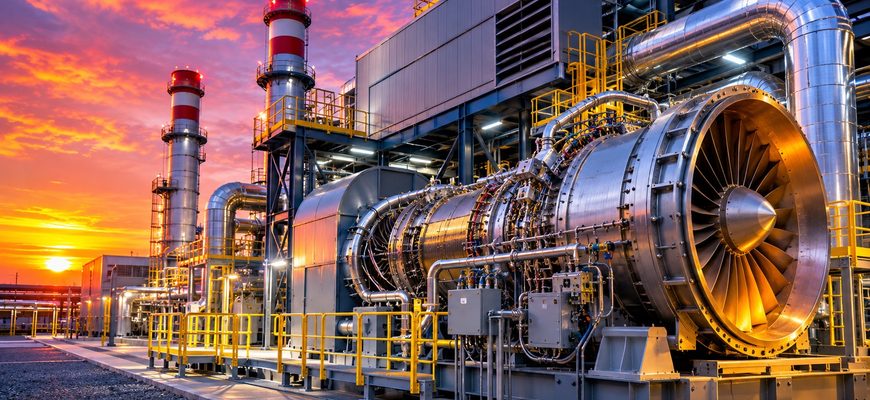
The SoftBank AI data center loss reached $3.73 billion after the Japanese technology investor revised plans to procure power-generation equipment for US computing projects. Disclosed on November 10, the charge reflects the financial consequences of reserving scarce energy infrastructure before project requirements were finalized.
SoftBank Group recorded a ¥597.2 billion loss tied to the procurement changes. Its financial report shows that the charge includes non-refundable advance payments and costs associated with modifying or settling contracts.
The development comes as SoftBank and its partners pursue large AI computing campuses, including the planned PORTS-Pike Technology Campus in Ohio.
It also raises a broader question for data center developers: what happens when the drive to secure electricity equipment moves faster than engineering and project planning?
Source: SoftBank Group’s consolidated financial report, published November 10, 2026. The figures refer to different accounting and contractual measures and must not be added together.
- SoftBank AI Data Center Loss: What the $3.7 Billion Covers
- Why the Possible $2.1 Billion Rebate Is Not a Recovery Yet
- Why AI Data Center Developers Reserve Equipment Early
- The Procurement Risk Chain
- Does the Loss Mean SoftBank’s Ohio AI Campus Is Canceled?
- SoftBank Reports a $7 Billion Quarterly Net Loss
- What the SoftBank Equipment Loss Means for AI Infrastructure
- The Bottom Line
- Related Infrastructure Reporting
SoftBank AI Data Center Loss: What the $3.7 Billion Covers
The official SoftBank financial report identifies Silver Bands 7 LLC, or SB7, as the subsidiary involved in the procurement arrangements.
SB7 entered into manufacturing-capacity reservations, equipment purchase contracts and other agreements intended to secure power-generation infrastructure for US AI data centers.
As the requirements of existing and planned projects evolved, SB7 revised its procurement strategy.
That decision led SoftBank to recognize a loss of ¥597.248 billion, equivalent to approximately $3.73 billion, for the six months ended September 30, 2026.
| Component | Yen | US Dollars |
|---|---|---|
| Non-refundable advance payments | ¥457.030B | $2.85B |
| Contract modifications and settlements | ¥140.218B | $0.88B |
| Total recognized loss | ¥597.248B | $3.73B |
Amounts from SoftBank Group’s Q2 FY2026 consolidated report, page 5 and Note 12. Dollar figures are those used by SoftBank and may differ slightly from conversions using other exchange rates.
Original Servers.News calculation using ¥457.030 billion and ¥140.218 billion divided by the ¥597.248 billion total. Percentages are rounded.
Why the Possible $2.1 Billion Rebate Is Not a Recovery Yet
SoftBank disclosed that SB7 may receive rebates of up to $2.1 billion on future equipment purchases over the next 10 years, subject to conditions.
The company did not recognize these potential rebates as an asset as of September 30 because their ultimate value could not be determined.
The distinction matters. A possible future rebate does not automatically reduce an already recognized accounting loss.
Why AI Data Center Developers Reserve Equipment Early
Large AI computing projects require far more than GPUs and server racks.
Developers also need electrical generation or grid supply, transformers, substations, cooling equipment and transmission infrastructure.
Some power-generation equipment can involve extended manufacturing lead times. Developers may therefore pay manufacturers to reserve production capacity before all project specifications are finalized.
Such arrangements can help protect delivery schedules. But they also introduce financial risk if a project changes its expected electrical design, delivery timeline or equipment configuration.
SoftBank’s results demonstrate that those early reservations can become costly even before a data center begins operating.

The Procurement Risk Chain
Servers.News explanatory schematic. This describes a general procurement-risk mechanism and is not a reconstruction of undisclosed SoftBank supplier contracts.
The broader AI infrastructure market faces similar timing pressures. Earlier this month, OpenAI announced its Grid Protectors initiative , reflecting the growing importance of coordinating large computing loads with electric utilities.
Does the Loss Mean SoftBank’s Ohio AI Campus Is Canceled?
No cancellation of the PORTS-Pike Technology Campus was established by the November 10 financial disclosure.
SoftBank’s report identifies PORTS-Pike in Pike County, Ohio, among the US projects covered by SB7’s broader power-equipment procurement arrangements.
It does not provide a project-by-project allocation showing that the entire $3.73 billion charge belongs to the Ohio campus.
According to Reuters’ November 10 report , SoftBank said there was no discussion of reducing the size of the Ohio project and denied allegations of defaulting on turbine payments.
The August announcement from SB Energy and NVIDIA described plans for approximately 8 gigawatts of IT computing capacity at PORTS-Pike, supported by at least 10 gigawatts of new power generation.
Those are planned figures, not proof that the full computing campus or its associated generation is already operational.
The initial development is intended to proceed in phases beginning in 2028, subject to the project’s necessary infrastructure, approvals and financing arrangements.
The important distinction is between a change in equipment procurement strategy and a verified cancellation of an entire AI infrastructure project.
SoftBank Reports a $7 Billion Quarterly Net Loss
The equipment charge was one component of a much wider earnings reversal.
SoftBank reported a net loss attributable to owners of the parent of ¥1.115 trillion, approximately $7 billion, for July through September 2026.
In the same quarter a year earlier, the company recorded approximately ¥2.502 trillion in net profit.
The latest consolidated report also shows a ¥768.0 billion net loss attributable to owners of the parent for the six months from April through September 2026.
| Financial Measure | Amount | Period |
|---|---|---|
| Equipment-related loss | ¥597.248B | Six months ended September 2026 |
| Net loss attributable to owners | ¥1,115.337B | July–September 2026 |
| Net loss attributable to owners | ¥768.007B | April–September 2026 |
| Net sales | ¥4,235.037B | April–September 2026 |
Source: SoftBank Group consolidated financial report, November 10, 2026. The July–September and April–September results cover different periods; the six-month net loss must not be described as the quarterly loss.
SoftBank’s financial performance also reflects investment valuation movements, financing expenses and other items unrelated to the power-equipment procurement decision.
Reuters reported that quarterly financing costs more than doubled year over year, adding pressure to the company’s financial position.
The results therefore should not be interpreted as evidence that the entire $7 billion quarterly loss came from one data center equipment decision.
What the SoftBank Equipment Loss Means for AI Infrastructure
The central finding is that securing physical infrastructure early can reduce scheduling risk while creating another form of exposure.
For developers, the key challenge is deciding how much capacity to reserve before final engineering and customer commitments are in place.
- Align procurement with design maturity. Manufacturing reservations should be evaluated against realistic power requirements and site-specific engineering decisions.
- Understand cancellation provisions. Non-refundable deposits, supplier settlements and modification fees can materially affect project economics.
- Separate contracted capacity from operating capacity. An announced gigawatt figure does not mean all equipment has been installed or commissioned.
- Test alternative configurations. Grid supply, on-site generation and phased construction can produce different procurement requirements and risks.
- Disclose uncertainty in recoveries. Future rebates should not be treated as realized savings before the relevant conditions are met.
The same financial discipline matters across the hyperscale sector. Servers.News’ comparison of AWS, Azure and Google Cloud showed how quickly cloud revenue and infrastructure investment are expanding, while noting the limits of financial disclosures as measures of actual computing capacity.
Physical delivery remains another constraint. Microsoft’s withdrawal from a planned UK AI data center agreement highlighted how electricity-grid delays can affect commercial infrastructure arrangements.
The Bottom Line
SoftBank’s $3.73 billion equipment-related loss illustrates an underappreciated cost of the AI infrastructure expansion: reserving scarce power equipment before project plans are settled can create substantial contractual liabilities.
The disclosed loss comprises $2.85 billion in non-refundable advance payments and $880 million in costs related to contract changes and settlements.
Up to $2.1 billion in possible future rebates may provide some offset under certain conditions, but the company has not recognized those rights as an asset.
The SoftBank AI data center loss is not proof that the company’s planned Ohio campus has been canceled. It is evidence that the financial risks of AI infrastructure begin well before the first servers are switched on.