The US Senate has voted 62–33 to advance a sweeping energy-permitting bill that would require major new data centers to shoulder additional electricity-system costs tied to their demand. The Bipartisan American Affordability and Jobs Act of 2026 passed on November 19, but it still requires action by the House of Representatives and has not become law.
The proposal links two contentious issues: speeding the construction of energy infrastructure and determining who should pay when high-density AI computing requires new power plants, transmission capacity and distribution upgrades. Supporters call it a ratepayer-protection measure; environmental advocates warn that other parts of the bill could weaken public oversight.
The Senate Bill: What Actually Happened
The US Senate passed the Bipartisan American Affordability and Jobs Act of 2026 by 62 votes to 33 on November 19. The large permitting package seeks to accelerate reviews and approvals for infrastructure including power generation, transmission lines and other major projects. AP and Reuters reported the vote on November 19–20, and Senate Energy and Natural Resources Committee materials describe the measure’s intended treatment of new data center electricity costs.
The bill now moves to the House. A Senate vote is a major legislative step, but does not independently impose a new nationwide rate structure on AI facilities today. Any claim that data centers already must pay under this new statute would be premature.
Supporters argue that federal permitting has delayed expansion of the power system while AI growth has driven up demand. Critics say the broader package may weaken environmental safeguards and reduce opportunities for communities to challenge harmful projects.
Who Would Pay for a 20 MW Data Center?
The publicly available introduced text of S. 5653 defines covered large data center or high-density computing demand in relation to 20 megawatts or more, including certain developments built in phases that are expected to meet the threshold at full build-out. Operators should check the final enacted language if Congress changes the bill.
The proposal is intended to prevent the incremental electricity-system costs of a qualifying new computing facility from being spread across other customers. Its definition of incremental costs covers expenses that would not have been incurred without the additional large load, such as relevant generation, storage, transmission and distribution work.
The text also contemplates continued cost recovery if a covered customer stops buying electricity before the attributable investment is fully repaid. That addresses a central financing concern: infrastructure can take years to build and recover its costs, while compute demand or business models may change much faster.
| Issue | Current situation / question | Proposed approach in S. 5653 |
|---|---|---|
| New computing load | Large facilities can require major additions to local and regional grids. | Apply special rules to qualifying loads at the 20 MW threshold. |
| Incremental system costs | Utilities allocate investment costs under existing regulatory approaches. | Recover the full attributable incremental cost from covered computing loads. |
| Other customers | Household and business customers can face concerns about cost shifting. | Prevent allocating covered incremental costs to unrelated customers within the bill’s terms. |
| Customer exits | Infrastructure investment may remain after a customer leaves. | Continue attributable cost recovery under specified arrangements. |
| Legal status | Existing state and federal frameworks remain relevant. | Senate passed; changes would require enactment and implementation. |
A simplified editorial schematic. Actual allocations depend on the final legislation, existing tariffs and regulator decisions.
What This Could Mean in Practice
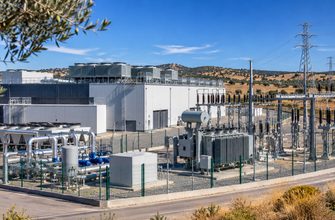
Imagine an illustrative 80 MW AI campus requesting service in an area with limited spare substation capacity. The electric utility could have to reinforce feeders, expand high-voltage transformer capacity and arrange additional system resources. Those investments can also benefit the wider network, which is why allocating costs fairly requires regulatory analysis rather than a simple equipment bill.
Under the proposed approach, the incremental portion attributable to the qualifying new computing demand would be assigned to that facility according to applicable rules. This example does not represent the cost or location of a real project, and it does not assert that all shared grid upgrades can be charged to one customer without review.
For data center developers, the commercial implications can extend beyond monthly electricity tariffs. A long-lived connection agreement, deposits, financing arrangements and service-termination provisions may influence the economics of GPU campuses. For ordinary customers, the intended benefit is less exposure to infrastructure expenses caused principally by new large loads.
That objective is also why power availability has become a central issue in data center planning. Servers.News recently reported on Microsoft’s withdrawal from a UK AI data center arrangement amid grid delays and OpenAI’s grid-related power proposals. The examples involve different jurisdictions and policies, but all demonstrate the growing connection between computing capacity and electricity infrastructure.
Why the Bill Has Both Supporters and Critics
Energy and industry groups say shorter reviews could enable generation and transmission projects to move ahead sooner, improving reliability and affordability.
The data center provision aims to require new large loads to cover their attributable infrastructure costs instead of shifting them to others.
Environmental groups warn that changes to environmental reviews and judicial challenges could diminish scrutiny of harmful projects.
Some groups say faster approvals could also expand pipelines and gas-fired power facilities serving data center demand.
The Associated Press described broad cross-party support for the permitting overhaul alongside strong environmental opposition. Senator Martin Heinrich, one of the bill’s advocates, said the legislation could lower energy costs and create jobs. Those are claims and projections from a supporter, not outcomes established at the time of passage.
Similarly, a Senate fact sheet cites research suggesting that data center load growth is already influencing wholesale electricity prices. Such projections are useful context but should not be presented as a precise estimate of what this single bill would save on a household’s next utility bill.
The relevant trade-offs are substantial. Accelerating power infrastructure might help large AI computing facilities secure supply. But weaker procedural safeguards could shift environmental and community costs. A responsible assessment considers both consequences without assuming either side’s projections are guaranteed.
What Data Center Operators Should Watch Next
First, the House must consider the measure. Any amendments, negotiations with the Senate and eventual signing will determine whether the 20 MW threshold and exact cost-allocation language survive. Second, regulators would need to translate enacted provisions into actual tariffs and operating procedures. Third, developers should review how future cost recovery could interact with power purchase agreements and utility interconnection contracts.
Operators should not base pricing or compliance decisions on the claim that the Senate’s proposal is already binding. But the 62–33 vote is a strong signal that lawmakers are treating AI-driven grid costs as a national policy concern.
Did Congress pass a new data center electricity tax?
No. The Senate approved a wider permitting bill with provisions on cost allocation. It is not an enacted standalone data center tax.
Is every small server room covered?
The published bill text focuses on qualifying large loads, generally 20 MW or more, with rules for phased projects. Exact applicability depends on final legislation.
Would the measure immediately lower consumer bills?
No measured bill reduction is established by the vote. Supporters forecast benefits, but their size and timing remain uncertain.
When would the new requirements start?
Only after completion of the legislative process and any required regulatory implementation, as specified in final law.
The Senate wants AI data centers to carry more of the grid investment associated with their demand, while accelerating approvals for the infrastructure needed to meet it. The next decisive step is the House—and the final legal details still matter.