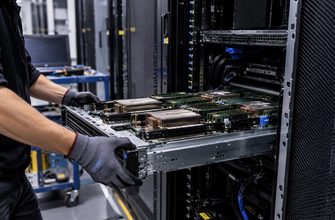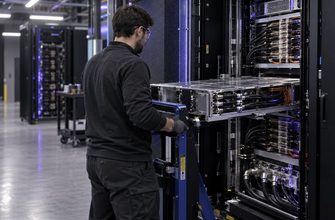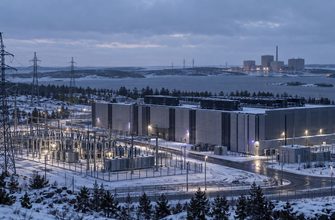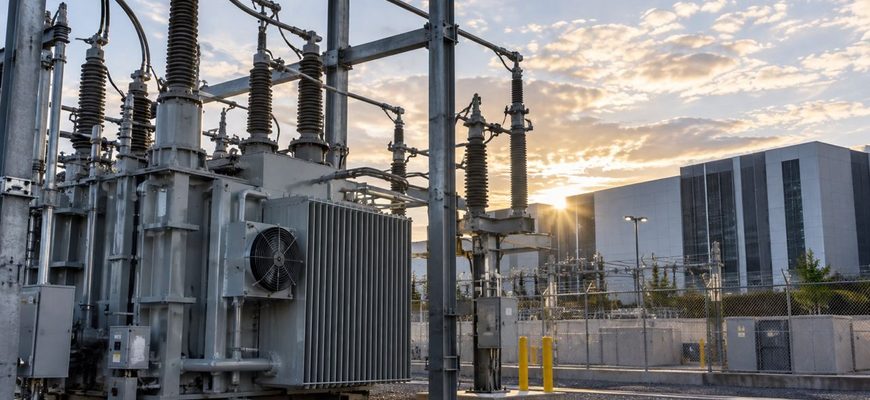
Google, NVIDIA and energy-management startup Emerald AI launched the AI Energy Management Alliance on September 16, bringing together technology companies, utilities and power producers around a plan to make large AI data centers more responsive to conditions on the electricity grid.
The alliance, known as AEMA, is focused on data centers capable of dynamically reducing or shifting their grid demand instead of operating solely as large, constant loads. Its stated objective is to develop performance standards and interconnection approaches that could give facilities with verifiable power flexibility faster access to constrained electricity grids.
Power availability and grid interconnection have become major constraints on AI infrastructure deployment. AEMA is proposing that data centers able to prove they can reduce demand during grid stress should be evaluated differently from conventional always-on loads.
A coalition spanning AI and power infrastructure
The alliance was announced by Emerald AI, Google and NVIDIA, with 18 additional launch partners spanning AI, semiconductors, utilities, energy production, storage and grid technology.
Those participants include Anthropic, Analog Devices, AES, Constellation, Fluence, GridUnity, National Grid, NRG and RWE, according to the launch announcement. Frank Lacey, an energy industry executive, will serve as AEMA’s executive director.
The coalition is an evolution of the Advanced Energy Management Alliance, an organization established in 2014 around demand-response and electricity policy. Its expanded remit now targets the rapid increase in electricity demand associated with AI computing infrastructure.
How a flexible AI data center would work
AEMA’s model does not prescribe one specific power architecture. Instead, the group says its framework will be technology-neutral and based on measurable performance, including how quickly and predictably a facility can respond when the electricity system is constrained.
Possible mechanisms include shifting computing workloads, drawing from battery storage, using colocated generation or temporarily reducing electricity consumption. The operating commitments could cover curtailment, response during grid contingencies and the ability to remain connected through certain disturbances.
| Area | AEMA approach | Infrastructure relevance |
|---|---|---|
| Power demand | Allow data centers to dynamically adjust grid consumption | Could reduce demand during periods of grid constraint |
| Interconnection | Create risk-adjusted pathways for facilities making verifiable flexibility commitments | Could shorten connection timelines where regulators and grid operators adopt such frameworks |
| Technology | Remain technology-neutral and measure actual performance | Allows storage, workload management and local generation to contribute |
| Operations | Standardize performance metrics and operational data sharing | Gives utilities a basis for evaluating whether flexible-load commitments are dependable |
Power is becoming part of AI system design
The initiative addresses a practical bottleneck in the construction of new AI capacity: obtaining enough electricity at the required location and connecting that load to transmission and distribution infrastructure.
Traditional interconnection studies generally assume that a large data center represents a substantial and relatively steady new load. A facility capable of reliably lowering that load under predefined conditions could present a different risk profile for utilities and grid operators, particularly where existing infrastructure is heavily utilized during only a limited number of peak periods.
AEMA wants that distinction reflected in technical requirements and interconnection policy. Its proposals include defining curtailment and contingency-response obligations before connection, establishing common performance metrics and allocating interconnection costs according to a project’s actual impact on the grid.
The distinction is important for infrastructure developers because flexibility is not automatically equivalent to additional grid capacity. Faster connections would depend on utilities, regulators and regional grid operators accepting the operating model and determining that promised demand reductions are measurable and reliable.
Existing projects will test the model
The alliance is launching as its members are already experimenting with flexible computing loads. Emerald AI and NVIDIA have conducted demonstrations of grid-responsive AI infrastructure, while Emerald AI is working with NVIDIA and Digital Realty on a power-flexible AI facility in Virginia.
Emerald AI chief executive Varun Sivaram said separately that the Virginia project is planned at nearly 100 MW and is expected to begin operating later in 2026. Google, meanwhile, says it has roughly 1 GW of demand flexibility incorporated into existing utility agreements.
Those deployments matter because the industry’s case for accelerated interconnection ultimately depends on operational evidence. Grid operators need to know whether a data center can reduce consumption by the promised amount, respond within the required period and maintain that response when the wider system is under stress.
What happens next
AEMA plans to work with utilities and grid operators on technical approaches while advocating for policies that recognize flexible demand in the interconnection process. The coalition says it will engage federal and state policymakers as those frameworks develop.
For data center operators, the immediate change is therefore organizational rather than regulatory: the alliance has launched, but its proposed treatment of flexible facilities is not a universal U.S. interconnection standard.
The next test will be whether measurable power flexibility moves from individual projects and utility agreements into repeatable connection rules. If that happens, electricity management could become a more explicit part of AI data center architecture alongside compute, networking and cooling.