Microsoft Maia 300 AI Accelerator was unveiled on October 12, 2026, introducing a new rack-scale AI inference system featuring 96 accelerators within a 167 kW power envelope. Microsoft plans to begin production deployments in 2027, expanding its Azure Maia infrastructure to multi-gigawatt scale.
The third-generation accelerator is designed for demanding AI workloads, including long-context reasoning, conversational applications and multi-step AI agents. Microsoft expects the system to deliver 40% more tokens per megawatt than leading GPU-based platforms, potentially improving the efficiency of its cloud data centers.
Microsoft has confirmed plans to deploy Maia 300 in production beginning in 2027. The company has not disclosed specific regional deployment schedules or individual data center capacity allocations.
- Microsoft Maia 300 AI Accelerator: Rack Specifications
- Chiplet Architecture Improves Memory Efficiency
- Ethernet Networking Connects Thousands of Accelerators
- Liquid Cooling Supports 167 kW AI Server Racks
- Microsoft Targets Higher AI Throughput per Megawatt
- Maia 200 Already Powers Production AI Workloads
- What Maia 300 Means for Data Center Operators
- What Happens Next for Microsoft Maia 300?
Microsoft Maia 300 AI Accelerator: Rack Specifications
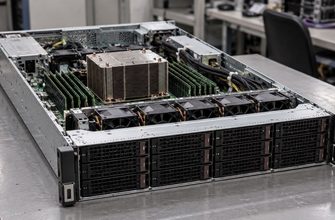
The Microsoft Maia 300 AI Accelerator combines high-bandwidth HBM4 memory, a multi-chiplet architecture and Ethernet-based scale-up networking to support demanding AI inference workloads. Microsoft designed the processor, rack infrastructure, networking and cooling system as an integrated platform.
Each accelerator contains eight HBM4 memory stacks, providing 288 GB of capacity and up to 18 TB/s of peak memory bandwidth. The processor has a thermal design power of 950 watts.
At rack scale, 96 accelerators provide approximately 27.6 TB of combined HBM capacity and 1.7 PB/s of aggregate memory bandwidth.
| Specification | Azure Maia 300 |
|---|---|
| Architecture | Multi-chiplet AI inference accelerator |
| Compute process | TSMC N2P |
| Accelerator TDP | 950 W |
| Memory per accelerator | 288 GB HBM4 |
| Peak memory bandwidth | 18 TB/s |
| Accelerators per rack | 96 |
| Rack power envelope | 167 kW |
| Total rack memory | 27.6 TB HBM |
| Aggregate rack bandwidth | 1.7 PB/s |
| Production deployment | Planned for 2027 |
Specifications are based on Microsoft’s October 12, 2026 technical disclosures. Performance targets remain subject to production validation.
Chiplet Architecture Improves Memory Efficiency
Maia 300 separates compute, memory-controller and I/O functions across specialized chiplets. Compute components use TSMC’s N2P manufacturing process, while the architecture is designed to reduce unnecessary data movement.
The processor uses Microsoft’s software-defined dataflow architecture to manage memory locality and optimize communication between processing resources.
According to the company’s official Maia 300 technical disclosure , the new architecture delivers 2.5 times the HBM bandwidth and 33% more memory capacity than Maia 200.
Ethernet Networking Connects Thousands of Accelerators
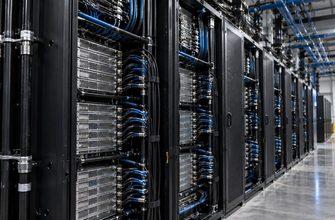
Microsoft has introduced a two-tier scale-up networking architecture based on Ethernet technology. The system can connect as many as 128 racks containing 12,288 accelerators within a single superpod.
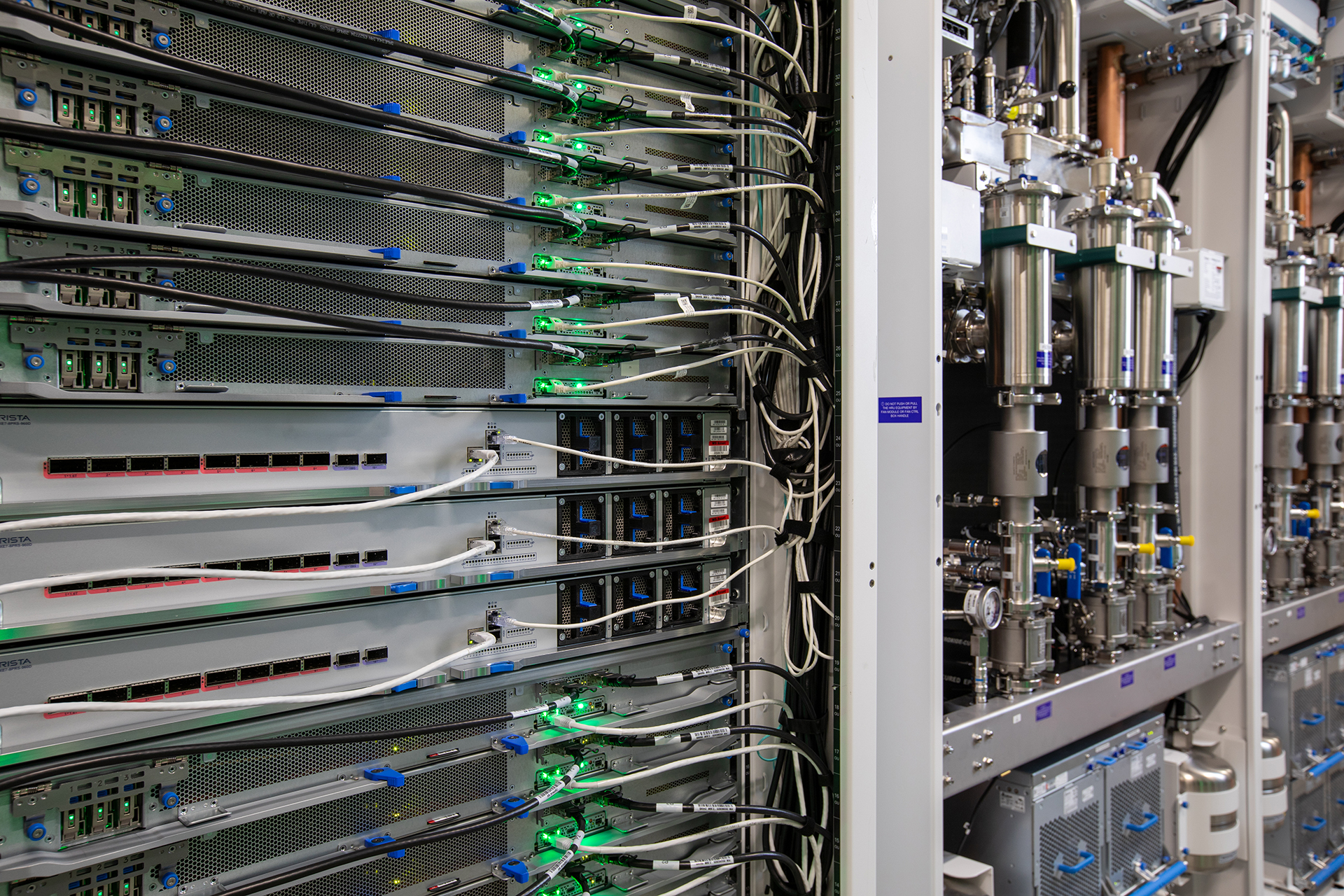
Each rack contains 24 trays with four accelerators per tray. Integrated network controllers allow accelerators to communicate across racks without requiring a separate host-mediated communication path.
The architecture is intended to support larger AI models, distributed inference workloads and more flexible resource allocation across data center infrastructure.
Liquid Cooling Supports 167 kW AI Server Racks
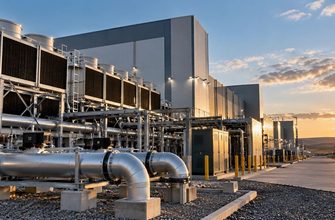
The rack’s 167 kW power envelope requires substantial electrical distribution and thermal management capacity. Microsoft uses liquid cooling to remove more than 80% of the rack’s thermal load, while air cooling supports additional components.
The design also incorporates dual power feeds and a 50-volt busbar architecture to distribute electricity across accelerator and networking trays.
These requirements reflect the broader shift toward liquid cooling for AI GPU servers , as data center operators deploy increasingly dense computing systems that exceed the practical limits of conventional air cooling.
Microsoft Targets Higher AI Throughput per Megawatt
Microsoft claims Maia 300 can deliver up to seven times the rack-scale token throughput of Maia 200 in a full 96-accelerator configuration. The company also reports more than 2.5 times the performance per watt compared with its previous-generation platform.
The efficiency comparisons require qualification. Microsoft has not publicly identified every competing GPU configuration used to calculate its claimed 40% tokens-per-megawatt advantage.
Reuters reported on October 12 that Microsoft is preparing a substantial deployment of its proprietary AI chips in 2027 as part of efforts to improve infrastructure efficiency and control costs.
Maia 200 Already Powers Production AI Workloads
Microsoft’s existing Maia 200 platform is already serving production workloads, including Microsoft Copilot. The company is expanding deployments across the United States, Europe and Australia.
Additional services, including GitHub Copilot and Microsoft Foundry, are expected to adopt Maia infrastructure as Microsoft expands its internal accelerator program.
Maia 300 builds on these deployments with additional memory bandwidth, increased accelerator density and larger networking domains.
What Maia 300 Means for Data Center Operators
The announcement illustrates how hyperscale cloud providers are increasingly designing processors, networking and physical infrastructure as integrated systems rather than independent components.
For infrastructure operators, the most immediate implications involve rack power density, liquid cooling requirements and the networking capacity needed to support large inference clusters.
Microsoft’s projected efficiency gains could improve the amount of AI inference capacity delivered within existing power constraints. However, those benefits have not yet been demonstrated through publicly documented Maia 300 production deployments.
What Happens Next for Microsoft Maia 300?
Production deployment of the Microsoft Maia 300 AI Accelerator is scheduled to begin in 2027 as Microsoft expands its Azure Maia infrastructure to multi-gigawatt scale.
The next measurable development will be the transition from announced hardware specifications and performance targets to production systems serving live AI workloads.
Until then, Microsoft’s official October 12 announcement establishes the company’s hardware roadmap without yet providing independent production-scale validation of its projected efficiency improvements.