Anthropic has disclosed approximately $269.4 billion in minimum cloud computing commitments across Amazon, Google and Microsoft in its newly public US initial public offering filing. Published on October 26, 2026, the registration statement details multi-year agreements that require substantial minimum payments even when actual computing usage falls below contracted levels.
The Anthropic cloud compute commitments provide a rare look at the financial arrangements supporting frontier AI development and deployment. The three agreements extend across different periods through 2036, while the company is also expanding beyond traditional cloud contracts into directly leased AI accelerators hosted in dedicated data centers.
Anthropic’s disclosed minimum commitments comprise approximately $114.5 billion with Google, at least $110 billion with Amazon and at least $44.9 billion with Microsoft. These are multi-year payment obligations, not spending already completed in 2026 or evidence of an equivalent amount of operational computing capacity.
- Anthropic Cloud Compute Commitments Reach $269.4 Billion
- Anthropic Is Moving Beyond Conventional Cloud Contracts
- Additional GPU and Equipment Agreements Add Complexity
- Why Power and Data Center Availability Still Matter
- What the Multi-Chip Strategy Means for Infrastructure
- What Remains Unknown?
- What Happens Next?
Anthropic Cloud Compute Commitments Reach $269.4 Billion
The figures appear in Anthropic’s Form S-1 registration statement, filed with the US Securities and Exchange Commission on October 26.
Although the underlying agreements were signed or amended earlier, the public filing brings their financial terms together in a document available to investors, infrastructure suppliers and other market participants.
The three cloud arrangements contain minimum spending provisions that apply regardless of actual usage, subject to their individual contractual terms.
| Cloud Provider | Minimum Commitment | Agreement Period |
|---|---|---|
| $114.5B | April 2026 – July 2033 | |
| Amazon | $110B | May 2026 – April 2036 |
| Microsoft | $44.9B | November 2026 – May 2033 |
| Combined | $269.4B | Across separate contract periods |
Figures are approximate contractual minimums disclosed in Anthropic’s preliminary S-1. The combined amount is an arithmetic sum, not an annual expenditure figure.
Google and Amazon’s arrangements include mechanisms for settling shortfalls between actual usage and minimum spending requirements, subject to adjustments. The filing identifies minimum obligations under the Microsoft agreement as well.
This structure provides long-term capacity planning and spending visibility, but it also creates financial exposure if customer demand or compute requirements develop differently from initial forecasts.
Anthropic Is Moving Beyond Conventional Cloud Contracts
One of the more technically significant disclosures concerns Anthropic’s transition from cloud-only procurement toward a hybrid infrastructure model.
In addition to acquiring computing services from cloud providers, Anthropic is pursuing direct leases of AI accelerators deployed in dedicated facilities operated on its behalf. The company refers to this approach as Anthropic Direct.
The filing describes an architecture that uses AWS Trainium, Google TPUs, NVIDIA GPUs and AMD GPUs across different workloads.
This multi-chip approach potentially offers more flexibility in balancing cost, performance and available capacity. However, it also requires coordinating different accelerator architectures, provider environments and deployment schedules.
Additional GPU and Equipment Agreements Add Complexity
The three major cloud contracts represent only part of Anthropic’s infrastructure arrangements.
Its filing also describes agreements with GPU infrastructure providers, including SpaceXAI, Nscale and Lambda, alongside equipment leases involving Broadcom.
The Broadcom arrangements alone involve approximately $161.2 billion in equipment-lease rent over the relevant lease terms, excluding interest, according to the filing.
These arrangements cannot simply be combined into a single confirmed spending total without considering their different accounting treatment, delivery conditions, cancellation provisions and periods.
Some values represent minimum obligations, while others are maximum contractual amounts or estimates dependent on future capacity delivery.
Why Power and Data Center Availability Still Matter
Reserving accelerator capacity is not equivalent to bringing new computing infrastructure online.
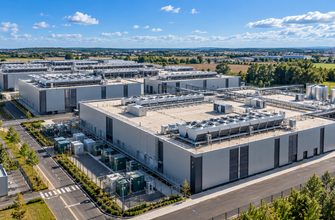
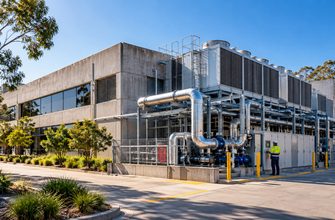
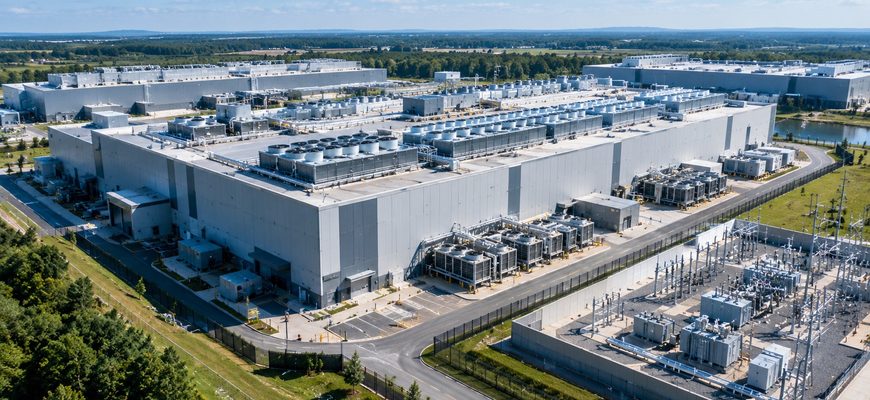
Dedicated AI facilities require sufficient electricity, cooling infrastructure, network connectivity and commissioning before computing equipment becomes operational.
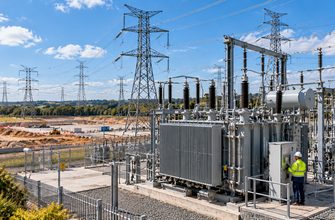
In its filing, Anthropic identifies the availability of energy, water and other infrastructure services as factors that can affect the deployment of dedicated computing capacity.
This challenge is visible elsewhere in the industry. Earlier in October, Servers.News covered Microsoft’s withdrawal from a planned UK AI data-center arrangement amid electricity-grid connection delays.
A separate Servers.News report examined OVHcloud’s disclosure of 110 MW in available data-center power capacity, highlighting the strategic value of existing electrical infrastructure.
Neither development establishes a specific constraint on Anthropic’s individual contracts. Both illustrate why the difference between contracted compute and available operational capacity matters.
What the Multi-Chip Strategy Means for Infrastructure
Using several accelerator architectures may reduce dependence on a single hardware platform, but it does not eliminate dependencies on cloud providers, specialized equipment suppliers or data-center construction schedules.
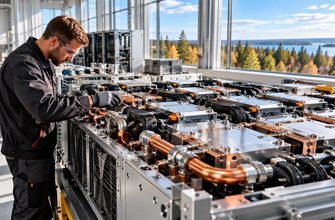
The challenge is especially relevant as systems become more power-dense. NVIDIA’s Vera Rubin rack-design initiative, previously covered by Servers.News, is one example of the hardware and cooling engineering required by next-generation AI installations.
For cloud architects and infrastructure planners, the central lesson is that compute procurement must be coordinated with physical deployment readiness and realistic utilization forecasts.
What Remains Unknown?
Anthropic’s preliminary registration statement does not disclose all of the information needed to determine the operational scale of its future deployments.
- The exact number of accelerators to be deployed under each arrangement.
- The full geographic distribution of dedicated computing facilities.
- The power capacity required for every planned installation.
- Actual utilization rates across future contracted capacity.
- The final aggregate commitment amount in certain blank sections of the preliminary prospectus.
- The ultimate cost and timing of capacity that depends on future delivery.
The distinction between committed spending, estimated future payments and installed infrastructure is essential when interpreting these disclosures.
What Happens Next?
Anthropic’s next milestones include further updates to its IPO registration statement, continued delivery of contracted computing capacity and expansion of its hybrid infrastructure model.
The company reported approximately $16.3 billion in revenue for the first half of 2026, underscoring the scale of its commercial growth. Whether that growth can support its expanding long-term computing obligations will depend partly on customer demand, deployment timing and utilization.
For data-center and cloud infrastructure operators, the October 26 filing illustrates how AI computing has become a long-duration engineering and financial commitment. The equipment, facilities and electricity required to deliver that compute remain as important as the headline contractual amounts.
Reporting basis: Anthropic’s October 26, 2026 SEC Form S-1, independently examined by Reuters and TechCrunch. Contractual commitments do not represent spending already completed or proof of operational data-center capacity.