Google will invest at least €13 billion in artificial-intelligence infrastructure in Finland over the next two years, combining three new northern data centers with a 22-year agreement to purchase nuclear power from Finnish utility Fortum.
The program, announced on September 9, represents Google’s largest investment in Europe. It expands the company’s computing footprint beyond its existing data-center campus in Hamina and links the new capacity to long-term power arrangements covering nuclear generation, wind energy and grid-supporting infrastructure.
The scale of the commitment makes Finland a more important location in Europe’s AI infrastructure buildout. It also demonstrates how hyperscale data-center projects are becoming tied to power-generation contracts that extend decades beyond the construction of the facilities themselves.
Investment and power
At least €13 billion for Finnish AI infrastructure over two years, supported by a 22-year power purchase agreement covering up to 50% of the Loviisa nuclear plant’s capacity.
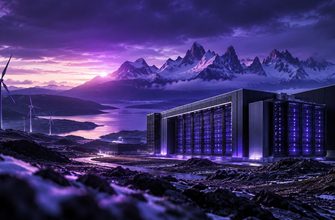
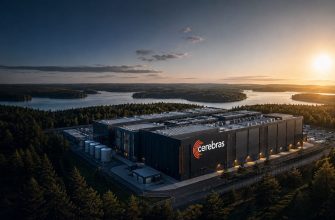
Three new data centers planned in northern Finland
Google said the infrastructure program includes three new data centers in northern Finland. The facilities will provide additional capacity for services including Gemini, Google Cloud, Search, Maps and YouTube.
The company already operates a data center in Hamina on Finland’s southern coast, built on the site of a former paper mill. That campus uses seawater from the Gulf of Finland as part of its cooling system.
Northern Finland offers a colder climate that can reduce the energy required for server cooling, but temperature alone does not determine whether a large AI campus can be built. Access to high-capacity grid connections, dependable generation and long-term power pricing has become central to hyperscale site selection.
Google has not disclosed the planned IT load, server count, accelerator inventory or individual construction budget for each new facility. Those figures therefore remain unknown.
Fortum signs 22-year nuclear power agreement
Alongside the infrastructure investment, Google and Fortum signed a power purchase agreement linked to the Loviisa nuclear power plant. The contract will begin with a smaller amount of capacity in 2028 and increase to 50% of the plant’s generation capacity from 2030 through 2049.
The agreement covers the period associated with extending Loviisa’s operating life to 2050. Fortum said the revenue certainty provided by the contract will support continued investment in the plant and the operation of its full capacity during the extension period.
Fortum is carrying out an investment program of approximately €1 billion at Loviisa. According to the company, about €700 million of the capital expenditure required to keep the facility operating through 2050 was still awaiting investment decisions when the agreement was announced.
The utility also expects the partnership to support an additional 10 MW increase in the plant’s output. That would come on top of a previously planned 38 MW uprate that Fortum expects to complete in 2028.
The full contractual price and volume profile were not disclosed. Fortum said the agreement should improve its comparable return on net assets by approximately 1.4 percentage points over time after half of the plant’s capacity is under contract.
AI expansion becomes a power-infrastructure project
For the data-center industry, the announcement is significant because the computing investment and the energy contract are being developed as one infrastructure program. AI facilities require both high-density computing hardware and a stable supply of electricity that can be secured years before servers enter operation.
The Loviisa deal gives Google access to an established source of continuous generation while providing Fortum with a long-term buyer. Reuters described it as Google’s first nuclear power agreement outside the United States.
The arrangement does not mean the new data centers will rely only on nuclear energy. Google and Fortum said they also plan to work on new renewable generation and flexible energy resources. The broader Finnish program includes wind-power agreements and measures intended to support grid stability.
What happens next
The first change in the energy arrangement is scheduled for 2028, when the Loviisa contract begins at a smaller capacity. The larger commitment covering half of the plant’s generation is expected to run from 2030 to 2049.
- Google is expected to advance construction and infrastructure work during the next two years.
- Fortum will continue investment decisions connected to extending Loviisa’s operation through 2050.
- The previously planned 38 MW power uprate is targeted for 2028.
- A further 10 MW increase is expected to be enabled by the Google agreement.
The project adds three planned data centers to Google’s Finnish footprint, but the company has not yet published commissioning dates for the individual facilities. Until those schedules and power requirements are disclosed, the €13 billion commitment and the Loviisa contract provide the clearest confirmed measure of the project’s scale.
The investment and power agreement were announced on September 9, 2026. Financial terms beyond the disclosed investment total and Fortum’s expected return impact were not published.