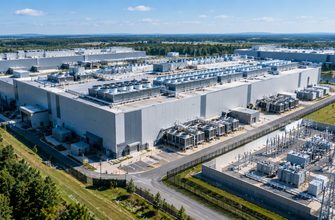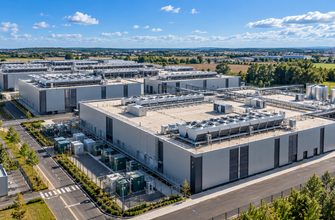
OpenAI Grid Protectors is a newly announced program aimed at helping future AI data centers reduce electricity demand during grid emergencies. Introduced on November 2, 2026, the initiative builds on an existing agreement with Georgia Power that allows up to 1 gigawatt of demand reduction at OpenAI’s planned Project Camellia campus in Effingham County, Georgia.
The program signals a broader approach to managing the electricity requirements of large AI computing facilities. Rather than treating their power demand as entirely inflexible, OpenAI wants future campuses it directly develops to coordinate with utilities and reduce consumption when electrical networks face exceptional pressure.
- OpenAI Grid Protectors Builds on an Existing Georgia Agreement
- How Much Power Could Project Camellia Reduce?
- What Demand Response Actually Means for an AI Data Center
- Why Georgia Power’s Grid Agreement Matters
- The Engineering Questions Still Unanswered
- Power Flexibility Cannot Replace Grid Infrastructure
- What Happens Next for OpenAI Grid Protectors?
- Related Infrastructure Reporting
OpenAI Grid Protectors Builds on an Existing Georgia Agreement
According to Axios’ November 2 reporting, OpenAI intends to extend demand-reduction commitments to additional US computing campuses developed directly by the company.
OpenAI’s planned Project Camellia is the initial model. The company announced the Effingham County project in July 2026, outlining a contract with Georgia Power for up to 3.2GW of electricity capacity.
In its July 22 official announcement, Georgia Power said its 25-year agreement would allow it to reduce the electricity delivered to the proposed facility by up to 1,000MW during periods of high grid demand.
Georgia Power subsequently announced regulatory approval of the contract on August 26. Those contractual arrangements therefore predate the new Grid Protectors announcement.
How Much Power Could Project Camellia Reduce?
The relationship between the proposed campus size and its flexible power commitment illustrates the project’s potential scale.
The 1,000MW upper limit equals 31.25% of the 3,200MW planned contracted capacity. This ratio is a scale comparison, not a measured reduction or a guarantee that the full amount will be available during every event. Source: Georgia Power.
Electricity service for Project Camellia is planned to arrive in phases between 2028 and 2032. OpenAI has not demonstrated a full-scale 1GW demand-response event at the completed campus, because the full facility is not yet operational.
What Demand Response Actually Means for an AI Data Center
Demand response allows a large electricity customer to temporarily lower its grid consumption when requested or when predetermined conditions are met.
For a computing campus, possible methods include shifting non-urgent workloads, reducing flexible computing activity or using appropriately configured local energy resources. The precise implementation depends on the facility’s engineering design and its operating agreement with the utility.
OpenAI has discussed coordinating with utilities on the amount of load that can be reduced, the response time and the duration of reductions. However, publicly available program information does not yet establish standardized technical methods or performance guarantees for every future campus.
Does reducing 1GW of demand mean supplying 1GW to homes?
No. Demand reduction and electricity generation are different operations.
If a data center reduces its electricity draw by 1GW, that can relieve demand on the grid. It does not automatically export 1GW from the data center into the grid.
Actual benefits depend on network conditions, the duration of the reduction, available generation and how the utility operates its system.
Why Georgia Power’s Grid Agreement Matters
The commitment is significant because large data-center power requirements are increasingly affecting utility planning. A project requiring several gigawatts may create additional demand for transmission, substations and generation capacity.
Georgia Power says the flexibility provision could help it avoid building some additional generation resources that would otherwise be needed to serve future peak demand.
The utility also says OpenAI will cover the infrastructure and electricity-service costs associated with Project Camellia, with contractual provisions designed to protect existing customers.

Any future savings or reliability improvement will depend on actual load behavior, verified performance and the costs of serving the facility over time.
The electricity challenge extends well beyond Georgia. Norway’s energy regulator recently outlined scenarios in which data-center demand could grow sharply and strain the national electricity balance.
The Engineering Questions Still Unanswered
For infrastructure operators, the most useful measures of demand-response capability are not just the maximum number of megawatts promised. Response speed, duration and frequency are equally important.
| Technical Measure | Why It Matters | Public Status |
|---|---|---|
| Maximum reduction | Determines potential grid-demand relief | Up to 1,000MW at Project Camellia |
| Response time | Determines usefulness during sudden grid stress | Not publicly specified for a nationwide standard |
| Duration | Determines how long demand can remain reduced | No universal published figure |
| Workload impact | Determines which computing jobs can tolerate changes | No full campus-level operating plan disclosed |
| Verified performance | Shows whether contractual flexibility works in practice | Full-scale results not yet available |
Assessment based on publicly described program goals and Georgia Power’s existing agreement. The table does not imply that technical measures are absent from non-public contracts.
These questions are particularly relevant to GPU clusters supporting large AI training and inference workloads. Not every computing task can be interrupted without consequences, and the ability to shift work depends on scheduling, application design and service commitments.
Power Flexibility Cannot Replace Grid Infrastructure
Flexible demand can help a utility manage exceptional periods, but it does not eliminate the need for additional electrical infrastructure.
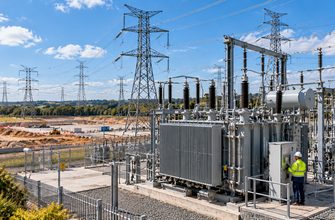
A data center still requires enough available power to run its contracted workloads during normal operation. Local grid connections, transformers, backup systems and transmission capacity remain central to project viability.
The distinction was visible in the United Kingdom, where Microsoft withdrew from a planned Nscale AI data-center agreement amid major grid-connection delays.
Power-related infrastructure risk also extends into daily cloud operations. In October, a Google Cloud London power event disrupted critical services , underscoring the importance of electrical resilience and application redundancy.
What Happens Next for OpenAI Grid Protectors?
The November 2 announcement establishes a broader intention, but the implementation details will determine its significance.
- New utility agreements: which additional OpenAI-developed campuses adopt flexible-demand commitments.
- Technical operating conditions: how much load each facility can reduce, how quickly and for how long.
- Project Camellia delivery: whether its phased electricity service and future computing operations meet the planned schedule.
- Measured outcomes: evidence that actual grid-demand reductions occur without compromising agreed computing services.
OpenAI’s Grid Protectors initiative reflects a potentially important change in how large AI computing campuses interact with electricity networks. For now, its clearest measurable foundation is an existing Georgia Power agreement for up to 1GW of flexible demand—not an already demonstrated nationwide grid-support capability.