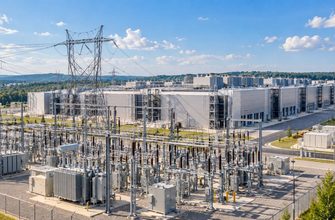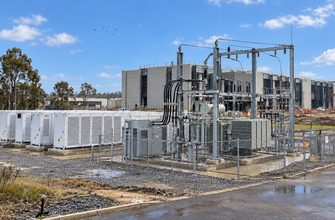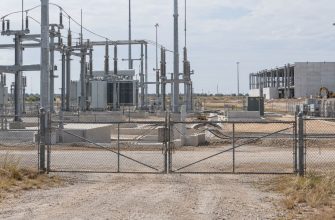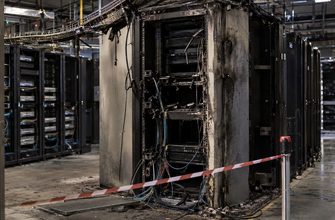
The Google Cloud London outage on October 20, 2026, disrupted UK banking applications and dozens of cloud services after a power event affected the company’s europe-west2-b availability zone. Google’s official incident record shows that the disruption lasted 7 hours and 52 minutes, from 7:08 a.m. to 3:00 p.m. British Summer Time.
The incident affected financial services including Revolut, Lloyds, Halifax and HSBC, while Google’s wider London cloud region experienced elevated errors and intermittent network failures. The disruption raises immediate questions about cloud application resilience, particularly where business-critical services depend on infrastructure in a single availability zone.
The essential distinction: Google confirmed an electrical power event in one London availability zone. That does not establish that the entire London region lost power or that every affected cloud service was completely unavailable.
Google Cloud London Outage: What Happened?
Google Cloud identified the affected location as europe-west2-b, an availability zone within its London-based europe-west2 region. Its official incident report attributed the outage to a power event.
According to Google’s incident updates, services in the affected zone became unavailable, while some services across the wider region experienced intermittent network problems and elevated errors. Engineers subsequently mitigated the power event and prioritized recovery of existing workloads.
The public incident record provides the following timeline. All times have been converted from US Pacific Daylight Time to British Summer Time.
| Time (BST) | Confirmed development |
|---|---|
| 07:08 | Incident begins in the London cloud region. |
| 12:58 | Google reports that the power event has been mitigated and service recovery is underway. |
| 13:44 | Google reports recovery for most workloads in europe-west2. |
| 15:00 | Google records the incident as ended after 7 hours and 52 minutes. |
| 15:03 | The final status update says most customers have recovered, with a very small number potentially still affected. |
Google closed the public incident record but acknowledged that some customers might still require assistance. Reuters subsequently reported that Google had restored full service availability. These statements describe different stages of recovery and should not be interpreted as identical restoration times for every application.
Which UK Banks and Services Were Affected?
Reuters reported disruptions involving Lloyds, HSBC and Revolut. Revolut confirmed problems affecting multiple services, including card payments and ATM withdrawals, while stating that customers’ money and data remained safe.
The Associated Press also identified Halifax among affected institutions. Lloyds said its banking app was operational again and that remaining services were expected to normalize.
Reports of problems also involved Rightmove, DPD and NHS England. However, user-generated outage reports do not independently establish how many customers were affected or whether every reported problem originated from the same infrastructure failure.
Separately, The Guardian reported disruption to a video platform used for remote court hearings in England and Wales. Royal Mail acknowledged related service issues but said letter and parcel deliveries were not affected.
Why Did One Power Event Affect So Many Cloud Services?
Google’s incident record named multiple affected products, including Compute Engine, Google Kubernetes Engine, Cloud Run, Cloud SQL, Cloud Storage, Cloud Load Balancing, Virtual Private Cloud networking and other managed services.
These products support different application layers. A business application might depend on compute instances, databases, networking and messaging services simultaneously. If several dependencies become unavailable or unstable, the application can fail even when some of its components remain healthy.
The technical distinction between an availability zone and a region is especially important. A zone represents a deployment location within a region, while regional services may distribute their infrastructure across multiple zones.
Google’s infrastructure reliability guidance recommends multi-zone architectures for workloads that require protection against zonal failures and multi-region designs where higher resilience is necessary.
The London incident demonstrates why application availability must be evaluated end to end. Redundant virtual machines alone may not be sufficient if an essential database, network dependency or service configuration introduces another failure point.
What the Power Event Does Not Yet Explain
Google has not published a completed root-cause analysis identifying the specific electrical component or sequence of failures. The available notices do not establish whether external utility supply, internal distribution equipment or backup power systems were responsible. Those details must await further investigation.
What Cloud Operators Can Learn From the Disruption
For infrastructure teams, the key question is whether an application can continue operating when one availability zone becomes unusable. Google’s documented deployment guidance provides several practical areas to review:
- Failure domains: Identify which application components and managed services depend on individual zones or regions.
- Redundancy: Assess whether workloads, networking and stateful services have appropriate multi-zone or cross-region protection.
- Recovery validation: Test failover, database consistency and application recovery instead of assuming that provider-level restoration automatically restores every business process.
- Independent recovery: Ensure that critical backups and recovery procedures do not depend entirely on the unavailable production environment.
Servers.News previously examined these recovery dependencies in Your VPS Snapshot Is Not a Backup, including the differences between infrastructure snapshots, independent backups and tested disaster recovery.
The event also follows other major enterprise cloud disruptions, including the September Salesforce service outage. Although the incidents have different technical circumstances, both reinforce the importance of understanding application dependencies beyond a provider’s headline availability targets.
Regulators Seek Answers as Google Investigates
The consequences extend beyond cloud engineering. Reuters reported that the UK’s Financial Conduct Authority was engaging with Google and affected businesses to understand the disruption.
In July 2026, the UK placed Google Cloud, Amazon Web Services, Microsoft and Oracle under direct oversight as critical third-party technology providers for the financial sector. The London outage provides a concrete example of the operational risks that such oversight is intended to address.
Google has committed to publishing an incident analysis after completing its internal investigation. The company has not yet publicly established the precise electrical failure mechanism, the total number of affected customers or a comprehensive measure of business losses.
For cloud customers, the next meaningful development will be the technical post-incident report: what failed, which redundancies worked, why recovery required several hours and whether additional safeguards are planned.
Until those findings are available, the confirmed lesson is narrower but consequential: a localized power-related infrastructure incident in a major cloud region can propagate through application dependencies and disrupt essential services far beyond the data center itself.
Reporting is based on Google’s official Cloud Service Health incident record, Google’s infrastructure reliability documentation and independent reporting from Reuters, the Associated Press and The Guardian. Incident status and service availability can change as investigations and customer recovery continue.