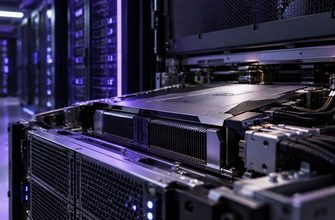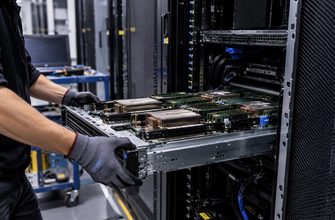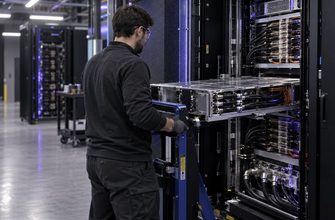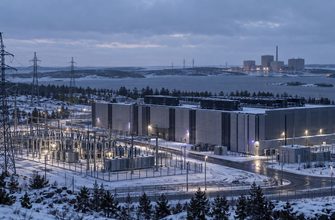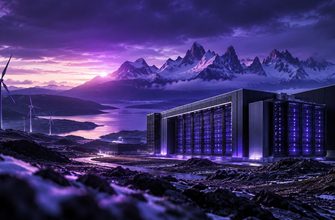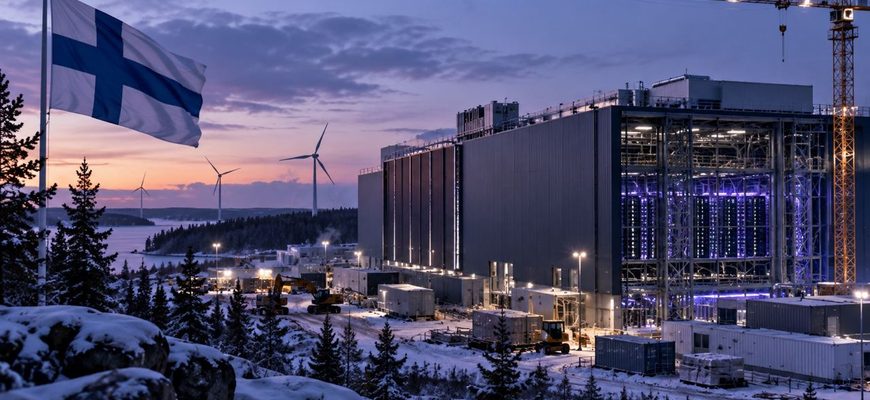
Google plans to invest at least €13 billion in data centers and supporting digital infrastructure in Finland during 2027 and 2028, its largest single investment in Europe, as the company expands the physical capacity needed for AI and its other online services.
The plan, announced by Google on September 9, covers infrastructure and partnerships in Hamina, Kajaani, Muhos and Vaala. The expansion will be paired with new electricity arrangements spanning nuclear power, onshore wind and battery storage, making energy supply a central part of the buildout rather than a separate procurement issue.
Google says the Finnish program will run across 2027 and 2028 and represents the company’s largest single investment in Europe.
New capacity across four Finnish locations
Google already operates a major data center campus in Hamina, where it converted a former paper mill into a computing facility more than 15 years ago. The new program extends that footprint while adding infrastructure associated with Kajaani, Muhos and Vaala in northern Finland.
Industry publication Data Center Dynamics reported that the investment will include data centers and supporting infrastructure across the four locations. Google had previously acquired land in Kajaani and Muhos, but had not initially disclosed the scale of the infrastructure it intended to develop there.
The company said the facilities will support demand for services including Gemini, Search, Maps and YouTube. It has not publicly disclosed server counts, accelerator volumes or the IT capacity in megawatts for the individual sites, so the €13 billion figure should not be interpreted as a disclosed GPU or compute-capacity target.
Power supply becomes part of the data center project
A major component of the announcement is a 22-year power purchase agreement with Finnish utility Fortum linked to the Loviisa nuclear power plant. Fortum said the agreement can cover up to 50% of the plant’s capacity and is intended to provide revenue certainty for a life-extension and power-upgrade program that would support operation through 2050.
Google described the arrangement as its first agreement supporting both a nuclear plant life extension and uprate. The companies have also signed a memorandum of understanding covering potential new nuclear and renewable generation, flexibility services and energy portfolio management.
The broader energy package also includes additional onshore wind procurement and a new 94 MW battery system. Google said it is working with Finnish transmission system operator Fingrid and Business Finland to locate infrastructure where grid capacity is already available, particularly in northern Finland near carbon-free generation.
Construction is scheduled for 2027 and 2028
Google estimates that the initial construction phase in 2027 and 2028 will support more than 37,000 jobs nationwide and contribute an annual average of €3.6 billion to Finnish GDP. Those figures are company estimates of wider economic activity rather than direct Google employment.
Once the facilities are operational, Google projects that the infrastructure will support about 7,000 jobs annually across direct operations, suppliers and surrounding economic activity. The company is separately committing €31 million over four years to community and workforce programs in Hamina, Kajaani, Muhos and Vaala.
Why the infrastructure industry should watch Finland
The immediate significance of the announcement is its scale and its integration of compute expansion with long-term electricity procurement. AI data centers require large quantities of firm power, while grid connection availability has increasingly become a constraint on new projects in several major data center markets.
Google’s Finnish plan addresses those requirements simultaneously: data center construction, existing grid capacity, nuclear generation, wind procurement and battery storage are being developed as parts of the same infrastructure strategy. Reuters reported that the €13 billion program is Google’s largest European investment and that the company intends to develop three new data centers in northern Finland alongside its established Hamina presence.
Assessment: For infrastructure operators and investors, the project is another indication that access to power and transmission capacity is becoming as important to large AI deployments as access to servers, accelerators and network equipment. Finland’s combination of available northern grid capacity and low-carbon generation gives Google room to add compute without relying solely on new power infrastructure around an already congested metropolitan data center market.
What happens next
The key execution period begins in 2027, when Google’s two-year investment program and the initial construction phase are scheduled to start. The next material disclosures for infrastructure readers will be site-specific construction schedules, electrical capacity, data hall scale and commissioning dates.
Those figures have not yet been disclosed. Until they are, the confirmed development is the investment commitment itself: at least €13 billion across Finnish digital infrastructure, accompanied by unusually long-duration energy agreements designed to support the additional computing load.